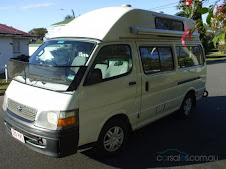
One of the problems with campervans is that they have a bad reputation in several respects:
1. Tourist transporters - locals in many rural locations hate tourists, and tripping into town in a campervan very much identifies you as a tourist.
2. Turd dumpers - some campervans don't have toilets, and users are inclined to dump a turd where there is no toilets, to the dismay of locals and other tourists. More so for governments who don't want to clean t up.
3. View blockers - some campervans are inclined to park in the best locations with the best views, to the dismay of locals who paid a million plus for their property, only to have a $50K-odd campervan park in front, and possibly dump a turd in their garden...or a beer bottle.
In truth, most campervanners are discrete, whether to avoid attention or to catch the scrutiny of police, who might be dismayed by the loitering of outside 'transients'. The attraction of mobile living gets more appealing by the day for several reasons:
1. Niche lifestyle vehicles - they are being made by more manufacturers and thus are getting cheaper. There are also the second hand campervans and the converts from delivery vans.
2. Lower cost batteries are making it easier to run appliances as well as lowering the operating cost. Expect more developments here with flow batteries.
3. More efficient appliances - The spectre of ever-improving energy efficiency is making it more appealing to function from a mobile home.
4. The high cost of housing - The cost of buying a home in Australia is enough to compel people to live on the road.
The big counter-arguments against the trend is probably:
1. The lack of comfort
2. The growing prospect of restrictions on where you can stay - the impossible implication of costs.
The simple solution is to hide your lifestyle - to live a life under the radar - to live life not in a 'campervan' but a simple delivery van. You will not get hassled out by aborigines as you cross the desert; you will not get your tires deflated by disgruntled landowners, and you will not get noticed by the police...unless you are surrounded by other campers, or otherwise parking in places where no other person would park at night, like in a national park or shopping mall carpark, etc.
If you want to know how seriously some people object to campervans;
read this story about a 59yo Christchurch (NZ) man who attempted to set fire to a campervan who parked outside his home. My guess is that he wanted to give a message to all concerned that campers are not wanted outside their homes. The man was arrested for attempted murder. The worst experience for me was an aboriginal throwing a bottle at my vehicle as he drove past. It was footy night, and he must have won or lost....or just been pissed. All normal living conditions I'm sure in central Australia.
-------------------------------------------


 Posts
Posts