Inflatable Canoeing Adventures - Buy this eBook!

Most of us can relate to the fun we had canoeing at summer camp when we were young. But that was nothing compared to the experience of whitewater kayaking that came next for me. I have always loved canoeing, though it always seemed difficult to participate. It has only been in the last decade that the development of inflatable canoes has made a big difference. You can more easily access rivers, you can store a canoe in your car, you can even take them on a plane. They are very light, very cheap, with little loss of functionality. Perfect for weekends away or campervan holidays. Social networking was the other big change. You can now use Facebook, etc to join canoeing adventures in your local region or abroad.

Inflatable Canoeing Adventures eBook - download the table of contents here for this eBook - available for just $US7.95. See my Inflatable Canoeing blog.

Wednesday, May 16, 2012

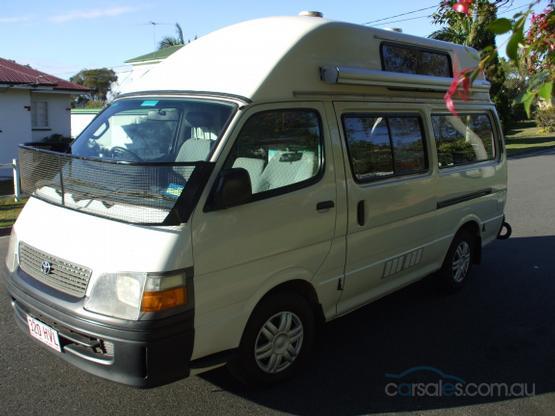
Campervan for $NZ5000 at Auckland or Queenstown Airport


We are looking to sell a nice vehicle well-suited to campervanning. We used this vehicle for campervanning as well as mountain biking. Its a really good vehicle for these purposes because:
1. Short wheel base
2. Handles well
3. Good size for camper and off-road
4. Not a conspicuous camper
5. Its a relatively new model (2001) - with low 143,000kms
6. Hanging points - you can easily fit the vehicle out - we will tell you where to go. 


This vehicle has around 143,000kms at present; its a manual 5-transmission, 2001 model, it goes really well mechanically. It has a lot of rust in the 'hood' over the drivers compartment. This is not a problem for obtaining the warranty of fitness because it is classed as an accessory which can be removed. In fact I renewed the WOF 3 weeks ago. The car is almost due for new tyres, and that will be about $380-400, so we have discounted it as much. 


I am travelling to Asia in the next few weeks so I am looking to sell this Holden Combo. Its currently at Queenstown, however I intend to move some homeware to my house on the North Island. Ultimately we will likely fly out of Auckland Airport, however we have still to book flights. 
Anyone flying into Queenstown or Auckland looking for a campervan could not be happier than with this vehicle for several reasons. It is not as conspicuous as a camper - because its a delivery van. Its a 1600cc engine, so low petrol consumption. Its short wheel base makes it suitable for off-road use. i.e. We take it off-road for MTB trails. The vehicle comes with a roof-rack as well.
We are looking for $4500 for the vehicle, or $5000 with new tyres. If we cannot sell the vehicle we will look at selling it through Turners. We would however prefer to give a discount to a direct buyer than a commission to Turners. We can deliver the vehicle to a person at Queenstown or Auckland airport. Auckland is preferred, as we need to take our bikes to the North Island. Email us at shouganai1 at gmail.com.

Tuesday, January 10, 2012

NZ freedom camping and camping sites

There are new regulations on where you can camp in NZ. For more information, I suggest going to the Jucy website, which also has links to other government information. In addition, there is a website which identifies all the paid and free camping sites around the country.

------------------------------------------
Andrew Sheldon www.sheldonthinks.com

Tuesday, March 1, 2011

Campervan rentals in the USA

Standby Relocations is now offering campervan relocations in the USA for as little as $1/day. Check with the routing feature in Google Maps though to see how long the distances are relative to your maximum allowed kilometres. Once you exceed those limits, you pay a per/km rate. If its nominal, no problem. You can pay the normal rental rate if you want more days, subject to their bookings of course. this company offers camper relocations in Australia, NZ, and now the USA. They have yet to offer such a service in Canada.
It is evident that the current offerings are for campervan relocations is restricted to movements to and from the following locations: Atlanta - Denver - Dallas - Los Angeles - Las Vegas - San Francisco - Boston - New Jersey and Orlando.
Such relocations are a good way of determining if you like the lifestyle prior to buying a campervan. The owners give you instructions on how to operate the camper facilities, and clearly there is a benefit in being able to try different styles, designs and size camper vans. We would all like a large one for space, but you might no like the awkwardness of driving a monolith. These are the issues best experienced. You can buy such campervans second-hand as well.
-------------------------------------------
Andrew Sheldon www.sheldonthinks.com

Thursday, January 6, 2011

Freedom camping - Are tourists the problem?

NZ is having a big debate at the moment - the issue is freedom camping. Freedom camping is the practice of camping in undesignated public or private areas where no provisioning is made for toilets. This compels tourists staying in campervans (without toilet amenities) to desiccate on the roadside. The consequence is a 'minefield of turds' and spent toilet paper shrewd across private or public land.
The people is that backpacking is such a big industry these days, and there is pressure building to regulate behaviour to diminish the impact. The impact is bigger in NZ, because it is a smaller country, though it seems at this point, the greatest sensitivity is in areas which do not really embrace the tourism. Lake Hawea is a very beautiful lake on the South Island, and the key issue is that this place has a very small commercial precinct, and I think locals are quite proud of their 'low key' living, and thus self-righteously proud of that. Rather than placing up toilet facilities, they would prefer to exclude tourists altogether. Why? Because they are not in business, so they have nothing to gain from tourists. So why not exclude others. This is why these people are sensitive.
Queenstown has a more visible and severe issue. It is a hotspot for tourism. There are a lot of bars and activities, so you can imagine that it would be a hub, and that people would simply want to spend a lot of time here. One of the problems for campervans staying here is the lack of parking in the area.
Elsewhere, I just think it is less of a problem. There are always inconsiderate people, and it would be wrong to assume that they are all foreigners. At any time there are only about 400,000 foreigners in the country, and probably 300,000 of them are staying in backpackers designated camping areas and hotels. Young Kiwis are just as likely to desiccate in the bush. I tend to find a lot of NZ'ers have little respect for their environment (as compared to Australia).
I might add that:
1. Faeces and toilet paper are biodegradable, so its mostly a visual concern, though obviously its a threat to water quality in areas, like waterways.
2. People are doing this because there are few public amenities. All it takes is to erect a pump-out toilet in those areas with a problem. I can imagine that these facilities only need to be emptied about every month. Perhaps the solution is to require consumers without a fitted toilet to pay a fee to use those facilities, and then you give them a map to find them. This means you can reasonably prosecute them for not using them. The licence can be sold by the dealerships, much as if you were selling fishing licenses. At $20 per person for 6 months, it would more than offset the cost of these services.
In this video, we have local residents taking action to remove 'freedom campers'. Unreasonable impositions on freedom campers is destined to push them further into the bush. That means these people are driving more and spending less money in NZ, going to NZ, but rather there money going to Saudi Arabia in the form of petroleum imports.
I have been to camping grounds where people have liberally shit in inappropriate places. It is not just the lack of concealment, they dump near watercourses. This practice is best handled with a license sticker on vehicles, displayed when they are at the site between certain hours, i.e. If you are in an undesignated site after 6pm or before 7am, then you pay the fine if you don't have a sticker. The question is how do you fine a transient like a tourist? Maybe the NZ government has to collect a bond, otherwise the police will start having to take credit card payments :)
------------------------------------------
Andrew Sheldon www.sheldonthinks.com

Booking fees are illegal

I am reminded of a legal case in Victoria where a woman was obliged to pay a booking fee when she arrived at the pick-up site. No mention had previously been made of the booking fee when she made the booking. The lady protested and ended up taking the matter to court, where she won. If you are in the same position, you ought to know all charges upfront. i.e. Otherwise its bait advertising. This is common. I have been stung for this fee when I have rented a camper as a 'return' for $5/day. I thought I was getting a good deal though.
I'm just glad there are some people who still believe in justice. I wouldn't have gone to the trouble. I'd be psychologically scarred if the decision was wrong....contrary to my good reasons.
------------------------------------------
Andrew Sheldon www.sheldonthinks.com

The risks and rewards of campervanning

One of the problems with campervans is that they have a bad reputation in several respects:
1. Tourist transporters - locals in many rural locations hate tourists, and tripping into town in a campervan very much identifies you as a tourist.
2. Turd dumpers - some campervans don't have toilets, and users are inclined to dump a turd where there is no toilets, to the dismay of locals and other tourists. More so for governments who don't want to clean t up.
3. View blockers - some campervans are inclined to park in the best locations with the best views, to the dismay of locals who paid a million plus for their property, only to have a $50K-odd campervan park in front, and possibly dump a turd in their garden...or a beer bottle.

In truth, most campervanners are discrete, whether to avoid attention or to catch the scrutiny of police, who might be dismayed by the loitering of outside 'transients'. The attraction of mobile living gets more appealing by the day for several reasons:
1. Niche lifestyle vehicles - they are being made by more manufacturers and thus are getting cheaper. There are also the second hand campervans and the converts from delivery vans.
2. Lower cost batteries are making it easier to run appliances as well as lowering the operating cost. Expect more developments here with flow batteries.
3. More efficient appliances - The spectre of ever-improving energy efficiency is making it more appealing to function from a mobile home.
4. The high cost of housing - The cost of buying a home in Australia is enough to compel people to live on the road.

The big counter-arguments against the trend is probably:
1. The lack of comfort
2. The growing prospect of restrictions on where you can stay - the impossible implication of costs.

The simple solution is to hide your lifestyle - to live a life under the radar - to live life not in a 'campervan' but a simple delivery van. You will not get hassled out by aborigines as you cross the desert; you will not get your tires deflated by disgruntled landowners, and you will not get noticed by the police...unless you are surrounded by other campers, or otherwise parking in places where no other person would park at night, like in a national park or shopping mall carpark, etc.
If you want to know how seriously some people object to campervans; read this story about a 59yo Christchurch (NZ) man who attempted to set fire to a campervan who parked outside his home. My guess is that he wanted to give a message to all concerned that campers are not wanted outside their homes. The man was arrested for attempted murder. The worst experience for me was an aboriginal throwing a bottle at my vehicle as he drove past. It was footy night, and he must have won or lost....or just been pissed. All normal living conditions I'm sure in central Australia.

-------------------------------------------
Andrew Sheldon www.sheldonthinks.com

Tuesday, August 3, 2010

Hazards of travelling outback Australia

The perils of GPS systems are nothing next to the perils of bad roads in the outback of Australia when the weather turns against you. If you are planning a trip into the Outback of Australia, and are planning to take a vehicle off-road (onto dirt tracks), there might be a lesson to learn from this article. Of course most campervans are designed and contracted on the basis that you will only travel on bitumen roads. But for general knowledge you might be interested in the experience of these people.
---------------------------------------------
Andrew Sheldon www.sheldonthinks.com
228667c25dbe479da19e0b954f8a0f1b

Thursday, September 17, 2009

How safe is campervanning?


About 10 years ago I scared the hell out of my friend's girlfriend whilst we were campervanning on a beach north of Newcastle, NSW. This 90-mile beach has some of the most impressive beach sand dunes in the world. In fact many movies are made at this site for this reason. I openly wondered how many buried campers are concealed under these shifting sands given the isolation, the ease of digging, the ease of escape for any offender. I can also imagine that many psychotics might hang out on the beach at night. This is pure speculation because I'm not affiliated with any.

Safety considerations are a concern, though perhaps less of a concern that for campers. Any bad experience is in most cases likely to be a result of bad luck whether than systematic risk. When I reflect on my bad experiences they have arisen because of the following:
1. Exposure: If you are readily seen then there is the potential for people to cause you harm.
2. Isolation: If troublesome people some across a camper in a remote area, they are more likely to cause some injury if they sense that they can escape accountability.
3. Conspicuous: Some people like to attack that which is different. If there are some drunk guys passing a car, that is not special. If they pass a campervan they are going to reflect on it. The only place a campervan does not look conspicuous is in a camper park.

The implications for campervanners are:
1. The less conspicuous the vehicle - the less likely you will have problems. Driving around in a huge campervan attracts attention. A small camper which looks more like a delivery van than a camper will attract no attention because it is perceived as just another vehicle, and people will not expect people to be sleeping in it. In some places there are laws against living in the back of a vehicle. i.e. Public ordinances. Usually local governments and police don't prosecute on the basis of these ordinances until the practice becomes a public nuisance, or results in some grievance. This is why I suggest a smaller, work-type vehicle makes a better campervan.
2. Less isolation: When I was travelling around some people parked their campervans in industrial estates in towns. This makes sense for campervans, but ultimately I want to be located around people, so for a work-type (inconspicuous) vehicle, I am more inclined to stay in the suburbs. I would just park on-street in some quiet street, usually under a street light. In outback Australia some aborigines threw a plastic bottle at a rental I was sleeping in. no damage, but the point is - it was a rental and it could have easily been a glass bottle.
3. Avoid lawless areas: Usually lawlessness arises in low income and indigenous communities, often associated with alcohol. These problems occurs in settled areas, so if you must stay in a 'bad area', make it in a rural area where there is less likely to be people. I was staying in Katherine, NT, Australia. The local aboriginal football team won the competition and were out driving their cars drunk. I tried to sleep, but ended up at a tourist carpark next to a hot spring. It was a lovely place to have a swim the next day.
-----------------------------------------------
Andrew Sheldon www.sheldonthinks.com

Gas guidelines for NZ campervanning

If you are thinking of buying a van or bus in NZ and converting it into a campervan then you might want to read the following rules on the matter. Gas-powering your appliances remains one of the best options for running campervans, particularly for smaller vans, given its high energy density. Other options to consider are:
1. Outsourcing - Using external services, e.g. Showers at your local public or private swimming pool or public beach facilities. Cost: Free, or up to $4.00. Of course you can live hand to mouth, shopping daily at Countdown or New World, so you don't need to refrigerate perishables. NZ is a fairly cool climate anyway.
2. Fuel cells: There is a new gas-fired fuel cell available in the USA which will greatly improve energy use by campervans because fuel cells offer up to 50% electrical efficiency, thus reducing the amount of heat loss.
3. Solar energy can be an attractive solution for larger campervans, though its not the best solution given its seasonal limitations and still low conversion efficiency. These are not such an attractive option, as batteries are also expensive.
4. Mains power: The other source of power is mains supply. This makes sense if you are taking short trips, but for long distance travelling it really does not make a lot of sense. You can use the mains supplies from campervan parks but you will pay a premium for it. This option only makes sense if you are going to stay there anyway, say for the security.

Expect in the next 2 decades some new combustion engines to be developed which will offer greater fuel efficiency. There is a lot of money going into research these days. The US Dept of Energy is throwing money at technology companies to develop new products.
-----------------------------------------------
Andrew Sheldon www.sheldonthinks.com

Tuesday, July 21, 2009

Technology will change campervanning forever

If you are interested in doing some touring I forecast that there will be a substantial change in the way we travel. The reason will be two-fold:
1. Low cost vehicles: The trend set by Indian car makers towards lower-cost, more economical vehicles. The focus has been on economy, but I expect future models to offer more in the way of 'lifestyle features'. For instance it would not surprise me to see a vehicle which allows you to increase the storage space, or even to create a sleeping area by taking our the passenger seat, or reconfiguring the driver seat. The trick is to come up with a seat that does it comfortably.
2. Lifestyle appliances: I believe we are going to see changes in the components that make up a car. By this I mean changes in the engine design, the cooling system, the appliances. Certainly a LCD makes sense to play movies if you have kids, but that is a family car. In a lifestyle car, you want a refrigerator, heating, battery support for a day, and the capacity to recharge the battery. Am I dreaming? I don't believe so. The current vehicles are only able to get 25% thermal efficiency. Most of the current fuel economy gains are coming from aerodynamic design, not from a more efficient engine. Wait and see! There is greater pressure to lift fuel efficiency than ever. The Stirling engine is not a substitute for the internal combustion engine. It will take a new design based on the internal combustion engine.
-----------------------------------------------
Andrew Sheldon www.sheldonthinks.com

Wednesday, July 8, 2009

Looking for a cheap holiday

There are fewer cheaper places to holiday than Asia, but consider campervanning in Australia, or some variation of this combination of these travel opportunities.

NZ is an expensive country to fly from/to, so it might make more sense to fly get a cheap ticket to Sydney or Brisbane with Virgin Blue, then transfer to another airline, preferably another discount airline. Baggage limits can be an issue. Developing countries tend to be cheaper. I would recommend the Vietnam for Asia, fly-drive in Australia, see http://campa-living.blogspot.com. For instance I returned from the Philippines with discount airline Tiger Airways, via Singapore to Darwin (or Perth), then I got a campervan across Australia to Sydney for just $5/day, with a fuel allowance. Discount airlines are flexible enough to allow you to do that. Being able to live out of a campervan meant I could easily stop wherever I wanted, eat healthy out of Woolworths and Coles stores, internet from libraries, showers at public swimming pools, public toilets in public reserves and hotels, even coffee shops. Makes a nice way to travel.
The Philippines is another cheap country to travel through as transport standards are good, its cheap and English speaking, and you can also travel overland through back-country. My next overland trip will be Manila to Davao, fly or boat to Manado, overland through Sulawesi to Makassar, ferry to (via Sarabaya) Denpaser to Bali, or flight to Australia, for the overland campervan trip. You might even be able to swing a camper back if you can triangulate your destinations.
The attraction of the Philippines is that until recently it has not really had a tourist identity; and for good reason, it never had an organised travel program. Recently increased expenditure on road upgrades, discount airlines has resulted in more Filipinos travelling and holidaying at home, and this has prompted a lot of governors to improve their facilities, whether hotels, restaurants, and events. Its early days but I note that viewing decks are being constructed along highways; hotels are being constructed, pathways are being built along rivers or to scenic locations like waterfalls. Tourist values will I believe result in people developing more pride in their community. You can expect more defensiveness as well. For instance the tourist hub of Sagada has a resolution to stop outsiders buying property there. It is still a big premature to travel to the Philippines...give it another 5-10 years. In the interim I recommend Vietnam.

The point of this article is to develop a long term travel strategy, schedule for a combination of travel values, avoid those standardised international hotels that really offer no unique travel experience. Travel is as much a learning experience as a restive escape. Make your holiday as full of activities and reflective opportunities as you can. I value the opportunity to hang out with expats in bars because they are well-travelled people living interesting lives.
----------------------------------------------
Andrew Sheldon www.sheldonthinks.com

Sunday, April 19, 2009

Jobs for motor home owners and retirees

A story in the Wanganui Chronicle 20th Apr 2009 has retirees traveling around NZ working on farms picking fruit and vegetables. There are plenty of stalls in such growing districts for direct sales as well, so anyone with some knowledge or a willingness to learn. might be able to extend their travels with the supplementary income from working on various farms. Such workers are called seasonal food harvesters. They work a few days a week, and you will meet a lot of people. from all around the world Some are local retirees, others are motor home explorers, others are foreign backpackers. eg. Northburn station in Central Otago pays $13.50 per hour a few months a year. Workers can learn from locals what to do in each region, so its an interesting experience, a new experience, as well as a door to some cheap fruit, vegetables and wine. Clearview Estate and a number of wineries advertise on their websites. Check out the website www.winejobsonline.com - but also do a direct search for wineries in areas of interest. In NZ its places like Napier-Hastings District, and in Australia its the Barossa Valley, Hunter Valley and Darling Downs. Backpacker accommodation can also provide referrals to casual employment agencies.

You can of course benefit from such transient labour in a number of countries, whether its Australia, NZ or the USA.

------------------------------------
Andrew Sheldon www.sheldonthinks.com

Sunday, January 25, 2009

Why pay full price for a campervan?

One of my readers has drawn my attention to a new website which provides a one-stop shop for campervanning in NZ. The problem of course is that you will be paying full price to use these services. I would be inclined to use the 'camper returns' though standbyrelocs.com. The benefit is that you will pay just $5/day for the van, and you will receive a fuel subsidy to return it. The disadvantage is that you will have a time limit on your trip.
I would suggest this is not a bad thing. If you assign 4hours for driving each day, you should be able to have adequate time to enjoy some recreation. Anyway, its a great way to gain an introductory rate to campervanning.
----------------------------------------------
Andrew Sheldon www.sheldonthinks.com

Saturday, December 6, 2008

Auckland - New Plymouth - Wanganui

This is a trip description for my recent arrival from Sydney. Arriving in Auckland. It was very difficult to find the Tourist Info, as its tucked away in the corner where you would expect the toilets to be. Found accommodation in Manukau City, a satellite city south of Auckland CBD with a shopping city. I had already arranged to inspect/buy a Holden Combo found on the internet, however I stayed in the Manukau Budget Motel ($60/night) for the first 2 nights.
After checking out the car, the dealer took me to the registration authority and I was on my way. I drove south to Hamilton, then headed towards New Plymouth via Taumarunui and Stratford, then I followed the coast down to Wanganui. It was really green, beautiful countryside. The highlights were from Te Kuiti to Stratford, and from New Plymouth to Wanganui. It was either green mountains or green rolling hills along the coast. I tried sleeping in the back of my vehicle. It was a little tight but ok. I'd had a few beers so that probably didn't help my sleep.
A cautionary note that the road around Te Wera was not sealed for about 20km. It was a bit wrong for a campervan. I spent the night at Stratford - can't remember the name of the pub, but I just stayed in the carpark for the pub.
This map shows the approximate route I took - the only difference is that I went through Hamilton City (5th largest city of NZ), and I don't see a need to do that.
See Google Maps.


-----------------------------------------------
Andrew Sheldon www.sheldonthinks.com

Sunday, November 30, 2008

Alternatives to campervans

You don't have to buy a campervan to get some practical camper-type vehicle. I've been in NZ for the last 2 weeks trying to find a property to buy. The first task was to buy a vehicle. I was motivated by the VW Caddy Life which I used as a campervan return (SYD-BRIS) last year. The VW is not available in NZ, and its a little pricey anyway. I did however find a Holden Combo 2001 model for $5,000. It had just 120,000kms, and it was in good condition. The attractions were that it had a big enought van compartment to carry a lot of stuff, including inflatable canoes, mountain bikes, as well as being able to sleep two people. More easily one, but then I'm marrying a 5 foot Filipino, so I'm sure we'll find a corner for her to fit in, as I will be sleeping diagonally. :)
The other attraction of this vehicle is that its just 1.4 litre, so great fuel economy. The bad points are that it was a manual, so my GF will have to learn to use a stick :( The view of the blind spots is not great either, so not really a city vehicle.
I used the following spreadsheet to make my purchase decision. I went online and obtained the price, kms, age of the vehicle, as well as other issues like tranmission and location, and I came up with the following choices. I think I got the best of them. Time will tell.
-----------------------------------------------
Andrew Sheldon www.sheldonthinks.com

Monday, May 5, 2008

Stand by cars - low season specials

This week Standbycars is able to offer campers at prices that even we can't believe.

Travel in New Zealand between now and 31 August and you can pick up a Hitop Camper for just NZ$35 per day! These campers are under 2 years old and have the added bonus of the incredibly reduced insurance liability of just NZ$1500, down from NZ$7,500! Upgrade to a 2 Berth Camper with Shower and Toilet for just NZ$4 extra per day or for those travelling in a bigger group we have 4 Berths for NZ$71 per day or 6 Berths for NZ$80 per day. All vehicles are fully equipped with all your camping and cooking needs and a bonus welcome pack. Pick ups are available from Auckland and Christchurch.

In Australia you can also snap up a bargain if you travel before 30 June. Hitop campers are on offer for AU$40 per day. These campers are under 2 years old and come with all your camping and cooking equipment. Pick ups are available from all major cities.
Our relocation pick this week is from Cairns to Melbourne and comes with an amazing AU$500 fuel allowance! Travel 5 days for AU$1 per day in a Hitop camper between now and 17 May. If you want to take a little longer you can buy up to 3 extra days for $75 per day.

If you are looking for a relocation deal check out our Hot Deals. We update the deals each morning with new trips. If there is a particular trip you are after and can't see it phone our reservations consultants and they'll add you to their waiting list. To make a booking, please call our reservations team on 1300 789 059 (toll free from within Australia) or 0800 789 059 (toll free from within New Zealand).

Saturday, April 19, 2008

My Campervanning Routes on Google Maps

Now you can view my suggested campervanning routes on Google Maps. Click on the following map to go to Google Maps. I have marked the routes I have done with a campervan, as well as suggested routes based on my driving around Australia (30-odd trips) and New Zealand (3 fly & drive trips). I have marked campervan hire places in green, overnight or scenic places in red and the lines represent the routes. This is a work in progress. You can relate the routes to the individual blog postings I continue to make.


View Larger Map
------------------------------------
Andrew Sheldon www.sheldonthinks.com

Friday, April 18, 2008

Campervanning – Sydney to Melbourne (summer mountain & sea route)

One of the best campervanning trips you can do in Australia is the Sydney to Melbourne route or visa versa. These are one-way trips that offer you the prospect of getting a great discount off the standard travel price. Looking at the Standby Cars website its apparent that vehicles in Sydney are picked up or delivered to Mascot, whilst vehicles in Melbourne need to be picked up or delivered to Melbourne City or Braybrook. See Google Maps for location details. The trip I consulted offered $110 petrol allowance, 3 days and a 1142km travel allowance for this trip. You will need to pay $5/day plus extra for kilometres over the allowance. The appeal is the variety of scenery that you will come across, as well as the accessibility to nice places to go out. There are also a great many routes to choose from. I have seen a great deal of NSW so I will outline what I think is the best way to go:

1. Departing Sydney: You are likely to be picking up a campervan at Mascot near Sydney Airport, so travel south on the tollway towards Wollongong. I recommend having a stop at Kiama for a bite to eat, maybe seafood. This will likely be around lunch time.Then driving on to Gerroa for a walk along the beach. Don’t spend too much time here you have alot of kilometres to drive. I recommend spending a bit of time exploring the coast around Ulladulla as its a very beautiful area. Depending how you are doing for time I recommend staying the night in Narooma or Moruya.

2.Departing Moruya: I suggest starting out early to avoid the afternoon sun. Continue south towards Bega, passing through Bermagui. Before Bega there is a turn-off to Cooma. Take this road, as it will take you through up the mountain ranges. This section will be boring, so speed through here. From Cooma take the Berridale turn-off to Jindabyne. I would think about having a snack in Berridale, with the intent of stopping in Jindabyne to buy any groceries to eat in the national park. The intent is to have a late lunch in Thedbo Ski Village. You should be able to leave their by 4PM, with the intent of staying in the park at a river flats that will become immediately apparent when you get there. But really you could happily find a great number of places to stay. Just take care driving at night or day because this is a narrow mountain road. Check whether the route is possible.

3. Departing Snowy Mountains National Park: The Alpine Way turns north Khancoban, which sees you exist the park, and then continue on to Corryong, Tallangatta, Wodonga, Wangaratta, Melbourne. The speed with which you complete this section will depend ultimately on when you have to have the vehicle back.

My concern with this route is that it will be too long. I have structured it as the scenic route. Unfortunately a number of these areas are very remote. I would suggest this route would likely require 1500km because of the amount of travel on secondary roads. For this reason you would want unlimited kilometres, and it would be far more pleasant to have 4 days. You have sleeping accommodation with you, so perhaps it makes sense to travel longer on the evening of the first night. This will mean you have a picnic llunch in the Snowy Mountains National Park at Tom Groggin, where I was actually suggesting camping.

---------------------------------------------
Andrew Sheldon www.sheldonthinks.com

Tuesday, March 11, 2008

Campervanning in New Zealand

There is probably no better time of year to go campervanning in NZ than the tail-end of summer. Standby Cars have some great deals for campervanning in NZ - check out their website - I just received a notification after using their service to travel from Darwin to Sydney and Sydney to Brisbane.
Looking at the deals available you have 4 to 5 days to travel from Auckland to Christchurch. You pay just $1-5/day to return the vehicle, plus free ferry crossing. I note that you don't get any fuel allowance, but then its a good deal regardless. My preferred route would be from Auckland to the Corimandel Peninsula, then down the east coast to Wellington, then crossing the ferry to the South Island of New Zealand, landing in Nelson, I would be inclined to head direct to Christchurch. I dont know if you need a booking to cross the strait. I've done it before, but I actually picked up a new hire car on the other side.
The other alternative is a 'fly & drive' strategy, whether you stay in hotels or backpackers. I prefer the campervan route myself. I have yet to campervan in NZ, but having been there I understand the Pacific Islanders (Fujians or Samoans) cause some problems. Haven't been hit by a Pacific Islander in NZ, but I was in Sydney, but it probably feels the same. I dont know there propensity to throw thinks or vandalise campervans. Hopefully it doesn't become a sport. I did however spend time in a NZ pub on a Volcanic Geology uni field trip, and hanging out in a pub in Auckland (the wrong pub as tourists are prone to do) they were pretty intimidating people. Actually I was winning successive games, but basically an Islander came up to me and said he wanted to play. Experience told me not to argue the point.
For that reason I suggest avoiding the major cities - particularly Auckland. Maybe there are similar problems around Rotorua. The great aspect of NZ is the nature, so that is where I would suggest you spend your time.
After spending a day or two in Christchurch I would rent a car and drive to Queenstown, see Milford Sound and the Frans Joseph (?) Glacier, and back to Queenstown. If possible I would then get a campervan back to Christchurch. This will allow you to go a different way, and or maybe find a few nice overnight camp stops. The south island is great for campervanning as there are few people there.
-----------------------------------------
Andrew Sheldon www.sheldonthinks.com

Saturday, March 1, 2008

Check out my Slide Show!

Japan Foreclosed Property 2011 -2012 - Buy this 4th edition report!

Are you aware that you can buy a house & lot in Japan for as little as $10,000. Surprising but true! Japan is a large market, with a plethora of cheap properties up for auction by the courts. Few other Western nations offer such cheap property so close to major infrastructure. Japan is unique in this respect, and it offers such a different life experience, which also makes it special. Some property is in rural areas subject to depopulation, but there are plenty of properties in the cities too. I bought a dormitory 1hr from Tokyo for just $US30,000.
You can view foreclosed properties listed for as little as $US10,000 in Japan thanks to depopulation and a culture that is geared towards working for the state. I bought foreclosed properties in Japan and now I reveal all in our expanded 200-page report. The information you need to know, strategies to apply, where to get help, and the tools to use. We even help you avoid the tsunami and nuclear risks since I was a geologist/mining finance analyst in a past life. Check out the "feedback" in our blog for stories of success by customers of our previous reports.