228667c25dbe479da19e0b954f8a0f1b
Inflatable Canoeing Adventures - Buy this eBook!
Most of us can relate to the fun we had canoeing at summer camp when we were young. But that was nothing compared to the experience of whitewater kayaking that came next for me. I have always loved canoeing, though it always seemed difficult to participate. It has only been in the last decade that the development of inflatable canoes has made a big difference. You can more easily access rivers, you can store a canoe in your car, you can even take them on a plane. They are very light, very cheap, with little loss of functionality. Perfect for weekends away or campervan holidays. Social networking was the other big change. You can now use Facebook, etc to join canoeing adventures in your local region or abroad.
Tuesday, August 3, 2010
Hazards of travelling outback Australia
228667c25dbe479da19e0b954f8a0f1b
Thursday, September 17, 2009
How safe is campervanning?
Safety considerations are a concern, though perhaps less of a concern that for campers. Any bad experience is in most cases likely to be a result of bad luck whether than systematic risk. When I reflect on my bad experiences they have arisen because of the following:
1. Exposure: If you are readily seen then there is the potential for people to cause you harm.
2. Isolation: If troublesome people some across a camper in a remote area, they are more likely to cause some injury if they sense that they can escape accountability.
3. Conspicuous: Some people like to attack that which is different. If there are some drunk guys passing a car, that is not special. If they pass a campervan they are going to reflect on it. The only place a campervan does not look conspicuous is in a camper park.
The implications for campervanners are:
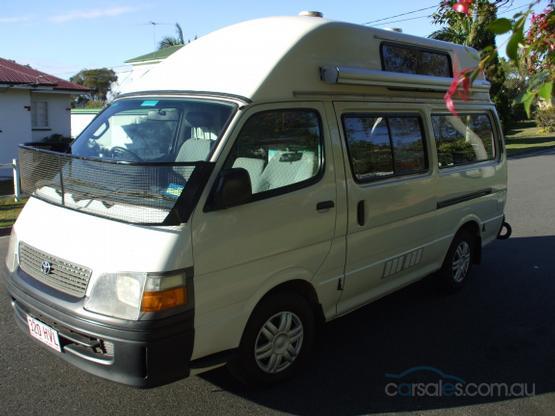
1. The less conspicuous the vehicle - the less likely you will have problems. Driving around in a huge campervan attracts attention. A small camper which looks more like a delivery van than a camper will attract no attention because it is perceived as just another vehicle, and people will not expect people to be sleeping in it. In some places there are laws against living in the back of a vehicle. i.e. Public ordinances. Usually local governments and police don't prosecute on the basis of these ordinances until the practice becomes a public nuisance, or results in some grievance. This is why I suggest a smaller, work-type vehicle makes a better campervan.
2. Less isolation: When I was travelling around some people parked their campervans in industrial estates in towns. This makes sense for campervans, but ultimately I want to be located around people, so for a work-type (inconspicuous) vehicle, I am more inclined to stay in the suburbs. I would just park on-street in some quiet street, usually under a street light. In outback Australia some aborigines threw a plastic bottle at a rental I was sleeping in. no damage, but the point is - it was a rental and it could have easily been a glass bottle.
3. Avoid lawless areas: Usually lawlessness arises in low income and indigenous communities, often associated with alcohol. These problems occurs in settled areas, so if you must stay in a 'bad area', make it in a rural area where there is less likely to be people. I was staying in Katherine, NT, Australia. The local aboriginal football team won the competition and were out driving their cars drunk. I tried to sleep, but ended up at a tourist carpark next to a hot spring. It was a lovely place to have a swim the next day.
-----------------------------------------------
Andrew Sheldon www.sheldonthinks.com
Gas guidelines for NZ campervanning
1. Outsourcing - Using external services, e.g. Showers at your local public or private swimming pool or public beach facilities. Cost: Free, or up to $4.00. Of course you can live hand to mouth, shopping daily at Countdown or New World, so you don't need to refrigerate perishables. NZ is a fairly cool climate anyway.
2. Fuel cells: There is a new gas-fired fuel cell available in the USA which will greatly improve energy use by campervans because fuel cells offer up to 50% electrical efficiency, thus reducing the amount of heat loss.
3. Solar energy can be an attractive solution for larger campervans, though its not the best solution given its seasonal limitations and still low conversion efficiency. These are not such an attractive option, as batteries are also expensive.
4. Mains power: The other source of power is mains supply. This makes sense if you are taking short trips, but for long distance travelling it really does not make a lot of sense. You can use the mains supplies from campervan parks but you will pay a premium for it. This option only makes sense if you are going to stay there anyway, say for the security.
Expect in the next 2 decades some new combustion engines to be developed which will offer greater fuel efficiency. There is a lot of money going into research these days. The US Dept of Energy is throwing money at technology companies to develop new products.
-----------------------------------------------
Andrew Sheldon www.sheldonthinks.com
Tuesday, July 21, 2009
Technology will change campervanning forever
1. Low cost vehicles: The trend set by Indian car makers towards lower-cost, more economical vehicles. The focus has been on economy, but I expect future models to offer more in the way of 'lifestyle features'. For instance it would not surprise me to see a vehicle which allows you to increase the storage space, or even to create a sleeping area by taking our the passenger seat, or reconfiguring the driver seat. The trick is to come up with a seat that does it comfortably.
2. Lifestyle appliances: I believe we are going to see changes in the components that make up a car. By this I mean changes in the engine design, the cooling system, the appliances. Certainly a LCD makes sense to play movies if you have kids, but that is a family car. In a lifestyle car, you want a refrigerator, heating, battery support for a day, and the capacity to recharge the battery. Am I dreaming? I don't believe so. The current vehicles are only able to get 25% thermal efficiency. Most of the current fuel economy gains are coming from aerodynamic design, not from a more efficient engine. Wait and see! There is greater pressure to lift fuel efficiency than ever. The Stirling engine is not a substitute for the internal combustion engine. It will take a new design based on the internal combustion engine.
-----------------------------------------------
Andrew Sheldon www.sheldonthinks.com
Wednesday, July 8, 2009
Looking for a cheap holiday
NZ is an expensive country to fly from/to, so it might make more sense to fly get a cheap ticket to Sydney or Brisbane with Virgin Blue, then transfer to another airline, preferably another discount airline. Baggage limits can be an issue. Developing countries tend to be cheaper. I would recommend the Vietnam for Asia, fly-drive in Australia, see http://campa-living.blogspot.com. For instance I returned from the Philippines with discount airline Tiger Airways, via Singapore to Darwin (or Perth), then I got a campervan across Australia to Sydney for just $5/day, with a fuel allowance. Discount airlines are flexible enough to allow you to do that. Being able to live out of a campervan meant I could easily stop wherever I wanted, eat healthy out of Woolworths and Coles stores, internet from libraries, showers at public swimming pools, public toilets in public reserves and hotels, even coffee shops. Makes a nice way to travel.
The Philippines is another cheap country to travel through as transport standards are good, its cheap and English speaking, and you can also travel overland through back-country. My next overland trip will be Manila to Davao, fly or boat to Manado, overland through Sulawesi to Makassar, ferry to (via Sarabaya) Denpaser to Bali, or flight to Australia, for the overland campervan trip. You might even be able to swing a camper back if you can triangulate your destinations.
The attraction of the Philippines is that until recently it has not really had a tourist identity; and for good reason, it never had an organised travel program. Recently increased expenditure on road upgrades, discount airlines has resulted in more Filipinos travelling and holidaying at home, and this has prompted a lot of governors to improve their facilities, whether hotels, restaurants, and events. Its early days but I note that viewing decks are being constructed along highways; hotels are being constructed, pathways are being built along rivers or to scenic locations like waterfalls. Tourist values will I believe result in people developing more pride in their community. You can expect more defensiveness as well. For instance the tourist hub of Sagada has a resolution to stop outsiders buying property there. It is still a big premature to travel to the Philippines...give it another 5-10 years. In the interim I recommend Vietnam.
The point of this article is to develop a long term travel strategy, schedule for a combination of travel values, avoid those standardised international hotels that really offer no unique travel experience. Travel is as much a learning experience as a restive escape. Make your holiday as full of activities and reflective opportunities as you can. I value the opportunity to hang out with expats in bars because they are well-travelled people living interesting lives.
----------------------------------------------
Andrew Sheldon www.sheldonthinks.com
Sunday, April 19, 2009
Jobs for motor home owners and retirees
You can of course benefit from such transient labour in a number of countries, whether its Australia, NZ or the USA.
------------------------------------
Andrew Sheldon www.sheldonthinks.com
Sunday, January 25, 2009
Why pay full price for a campervan?
I would suggest this is not a bad thing. If you assign 4hours for driving each day, you should be able to have adequate time to enjoy some recreation. Anyway, its a great way to gain an introductory rate to campervanning.
----------------------------------------------
Andrew Sheldon www.sheldonthinks.com
Japan Foreclosed Property 2011 -2012 - Buy this 4th edition report!
You can view foreclosed properties listed for as little as $US10,000 in Japan thanks to depopulation and a culture that is geared towards working for the state. I bought foreclosed properties in Japan and now I reveal all in our expanded 200-page report. The information you need to know, strategies to apply, where to get help, and the tools to use. We even help you avoid the tsunami and nuclear risks since I was a geologist/mining finance analyst in a past life. Check out the "feedback" in our blog for stories of success by customers of our previous reports.